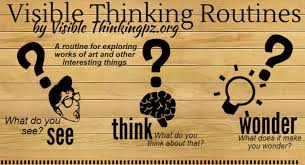
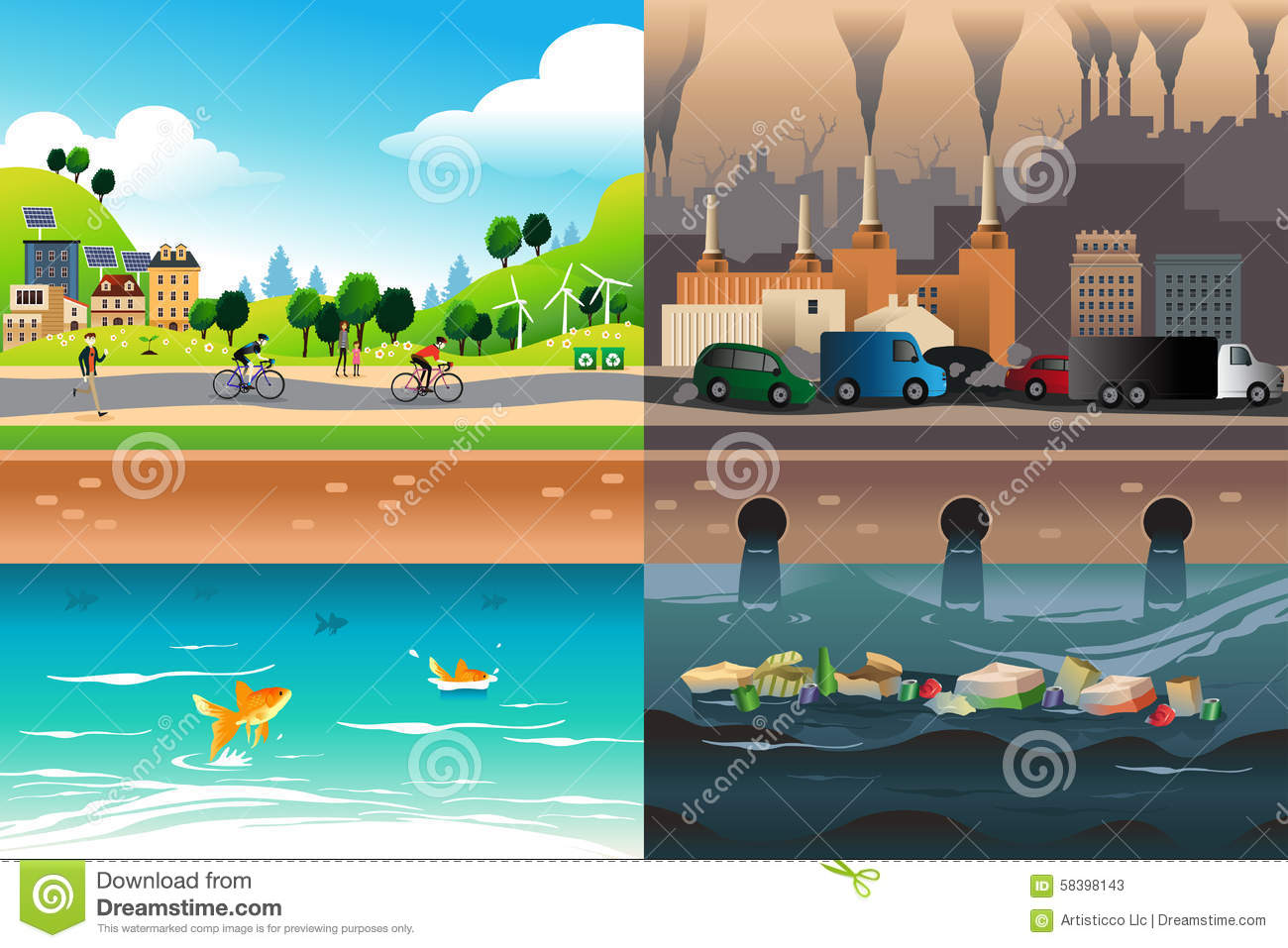
STEP 1: Thinking Routine about a picture.
PICTURE TO THINK ABOUT
STEP 2: Answer the following questions in your groups.
Let's answer different ways you can pollute or you can observe around you. To answer these questions we are going to use a Cooperative Learning Technique:
The Recorder of the groups will read the final conclusions to the rest and the teacher will write them on the blackboard.
- Do only big factories pollute?
- Do I pollute at home?
- How do I pollute in my daily life?
Let's answer different ways you can pollute or you can observe around you. To answer these questions we are going to use a Cooperative Learning Technique:
The Recorder of the groups will read the final conclusions to the rest and the teacher will write them on the blackboard.
STEP 3: With the Cooperative Learning Technique: THINK – PAIR – SHARE the student will look for some actions to do in order to solve the problems the have discovered in the previous part. We need to finish with at least 10 different actions.

- THINK: Each member of the group think on possible actions. (1 minute)
- PAIR: The two pairs of the group will talk and look for common actions (2 minutes)
- SHARE: The four members of the group will talk and look for some actions the think are great (4 minutes) the recorder will write down on a paper.
With all of them we will create a final decalogue.
STEP 4: Each group of four will have an action of the ten to represent and record a short video using Touchcast with the minIpads. So the student will have to write a short script about what will be in the video and which photo will they use to record it.
The video should have three very short parts:
- A situation explaining a wrong action.
- A situation explaining a good action.
- The sentences from the decalogue.
For example:
We are at home eating the afternoon snack, when the boy finishes the juice throws it to the paper bin. The mum explains he has to recycle it and he has to throw to the yellow bin. And then you say the sentences about the decalogue.
GRAMMAR TIPS:
- Remember to use the grammar about the present simple CB 145.
STEP 5: Recording the videos at the Image Lab.
STEP 6: Along these step the groups will have different task to do.
- One group will create the final video using all the videos of the groups. They can use WeVideo.
- Another group will create an Infography with the points of the decalogue. They can use Piktochart.
- Another group will create the aura (photo or picture) and learn how to work with Aurasma.
- Another four groups will create a Google SlideShow presentation, a very short one to explain kids from Year 1 and Year 2, good practices on the recycle topic. One group will divide themselves and each member will go to these four groups.
ASSESMENT
Teacher's assesment (60% of the final mark) Maximum 24 points.
Self-assesment (20% of the final mark) Maximum 24 points.


